
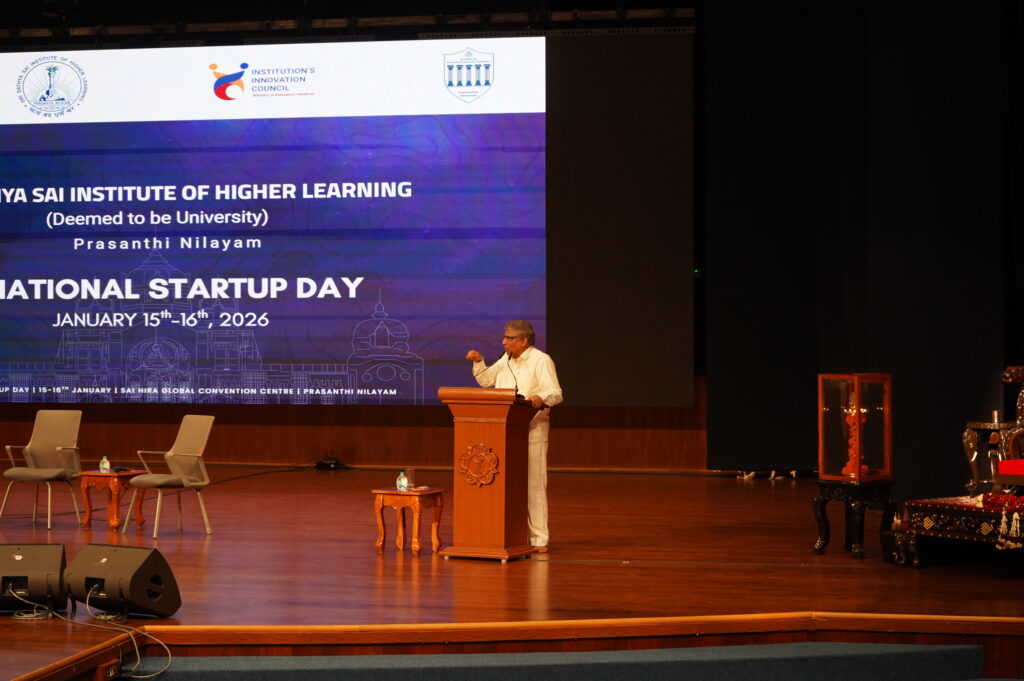
National Start-up Day 2026 : Expert Panel Discussion Summary
Topic: Research to Revenue – Challenges and Opportunities
The Expert Panel Discussion on “Research to Revenue – Challenges and Opportunities” addressed one of the most persistent gaps in India’s innovation ecosystem: the difficulty of translating high-quality research into scalable, revenue-generating solutions. Anchored in real-world entrepreneurial, corporate, and deep-tech experience, the session moved decisively beyond theory to examine why promising research often stalls—and what must change to unlock its commercial and societal value.
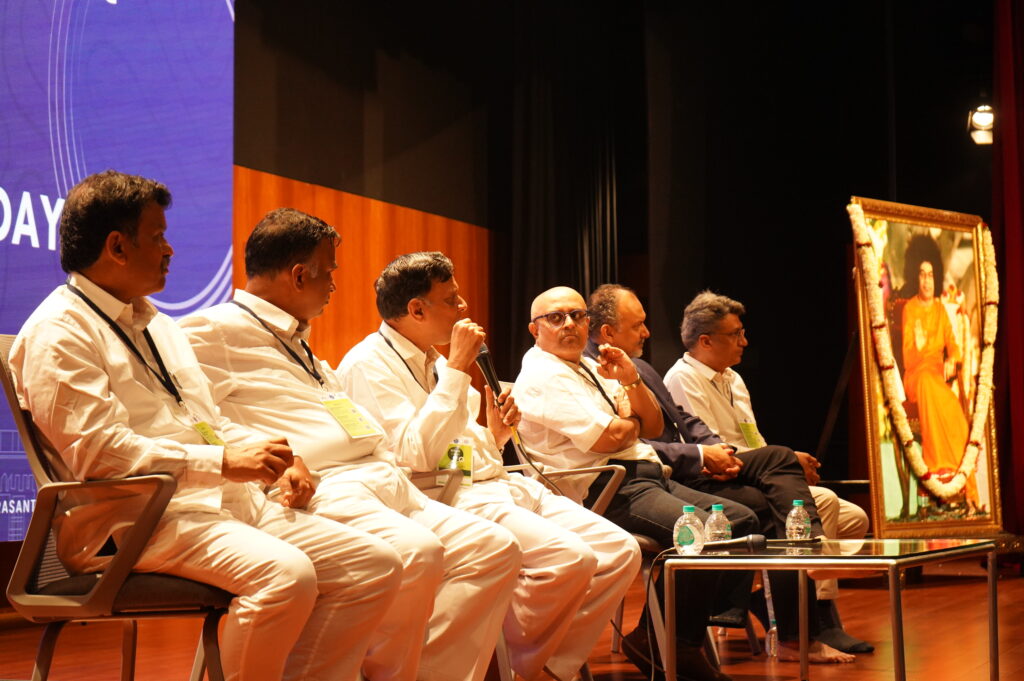
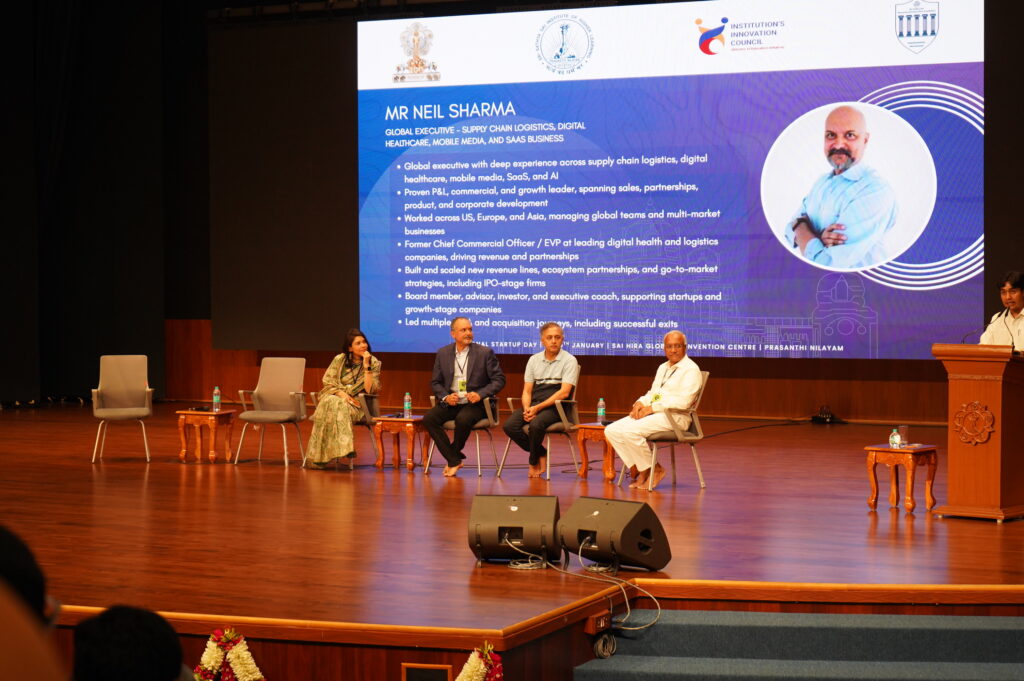
Moderated by NLS Murthy, General Manager at Greenway Health and a proud alumnus of Sri Sathya Sai Institute of Higher Learning, the panel brought together experts who have navigated the full spectrum—from academic research and deep-tech innovation to global consulting, venture scaling, and go-to-market execution.
The panelists included:
- Kamesh Krishnamoorthy, Co-Founder, Prospient Solutions Pvt. Ltd.
- Vandita Tiwari Kapoor, Founder & CEO, Iyurved
- Adithi Adhinachalam, Founder & CEO, Voxelgrids Innovations Private Limited
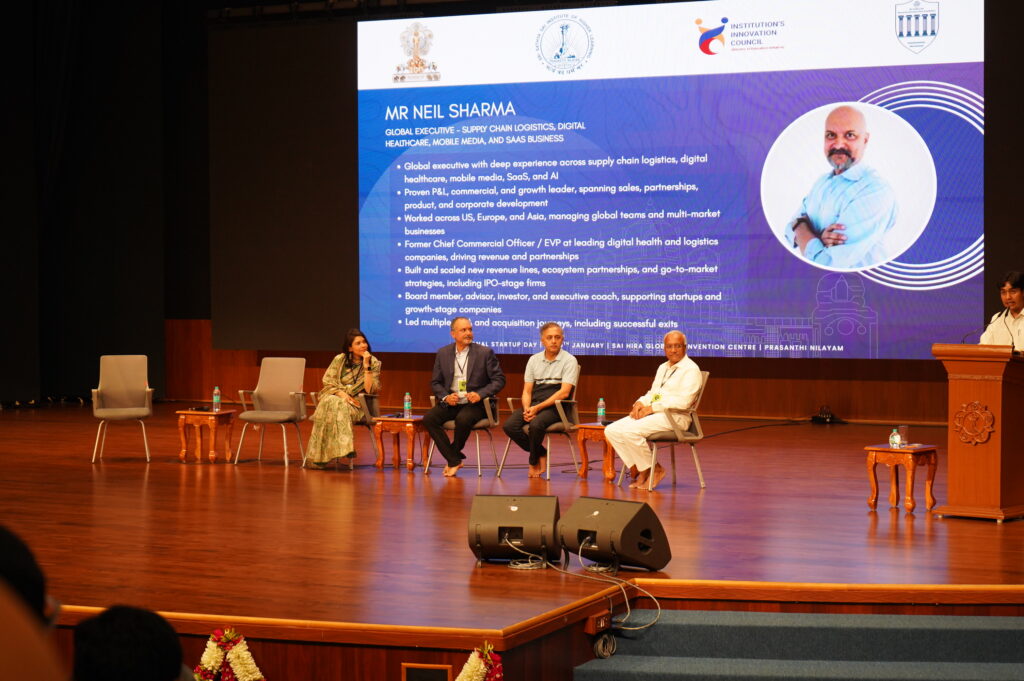
- Neil Sharma, Senior Partner, NCSP Supply Chain Experts
Together, they offered a candid, experience-driven exploration of how research ideas survive—or fail—the journey to revenue.
Setting the Context: Why Research Fails to Become Revenue
The discussion opened with a sobering reality: only a small fraction of global research converts into market-ready products, and India’s numbers, while improving, reflect a systemic challenge rather than an isolated failure. The issue, the moderator emphasized, is not a lack of intelligence or effort, but the absence of repeatable systems that connect research, validation, manufacturing, and markets.
Commercialization, the panel agreed, is not an event—it is a disciplined, multi-stage process requiring clarity of problem, differentiation, readiness assessment, and sustained execution.
Deep-Tech Reality: Long Horizons, High Conviction
Adithi Adhinachalam’s journey in building indigenous, low-cost MRI technology illustrated the unique challenges of deep-tech commercialization. Unlike digital startups, hardware and medical technology require long gestation periods, sustained funding, and extraordinary team resilience.
He highlighted three structural barriers that researchers often underestimate:
- Problem Exposure: Early-stage academic research often lacks proximity to real-world problems, leading to solutions without clear demand.
- Ecosystem Fragmentation: Isolated excellence does not translate into impact unless institutions, funders, and industry act in unison.
- Time Risk: Deep-tech ventures can take 10–15 years, making talent retention and morale as critical as funding.
A particularly insightful segment focused on intellectual property strategy. Filing patents, he cautioned, is not automatically protective. Enforceability, disclosure risks, litigation costs, and the ability to detect infringement must all be weighed. In many cases, strategic secrecy and execution speed may offer stronger protection than formal IP alone.
His core message was unequivocal: deep-tech founders must anchor themselves in purpose beyond personal gain. Without that, persistence over decades is nearly impossible.
Corporate Perspective: Innovation Begins with Unmet Needs
Drawing from decades of global consulting and enterprise scaling, Kamesh Krishnamoorthy reframed innovation through a corporate-commercial lens. He distinguished between incremental improvements and true innovation, emphasizing that revenue emerges when research addresses unmet or unknown needs, not when it refines what already exists.
He introduced a critical validation lens:
Can the customer afford to ignore your solution?
If the answer is yes, scalability will be limited—regardless of technical brilliance. He cautioned against overreliance on controlled research environments, where success metrics are forgiving and market realities are absent.
From his experience, failures often stem from:
- Weak problem definition
- Lack of early scale planning
- Technology-first thinking without customer urgency
He encouraged innovators to design for scale from day one—whether through cloud-native architectures, manufacturing efficiency, or ecosystem partnerships.
Research-Led Consumer Ventures: Where Market Research Goes Wrong
Vandita Tiwari Kapoor offered a grounded, practitioner’s view from the consumer health and nutrition space. Her insights were particularly relevant to early-stage founders navigating the “research-to-market” transition.
She identified three common mistakes that derail commercialization:
- Biased Market Research: Poorly designed questionnaires that validate moral correctness rather than real buying behavior.
- Wrong Respondent Pool: Surveying friends, family, or well-wishers instead of actual target customers.
- Misplaced Advice: Seeking guidance from people who have not built similar businesses, despite good intentions.
Her emphasis on customer intimacy was striking. True go-to-market clarity, she argued, emerges only when founders can describe their customer’s lifestyle, habits, language, spending patterns, and daily constraints with precision.
She urged students to avoid romanticizing funding narratives popularized by media platforms and instead focus on acquiring the first ten paying customers—a milestone that builds more credibility than any pitch deck.
Startup Scars and Founder Habits
Neil Sharma distilled his experience across startups, failures, acquisitions, and IPOs into a set of behavioral insights. He shifted the conversation from strategy to habits, asserting that commercialization success is often determined by founder behavior rather than idea quality.
Key habits he emphasized:
- Writing ideas down immediately to combat cognitive loss and false clarity
- Asking questions relentlessly to accelerate learning and calibration
- Collaborative mindset over individual brilliance
He cautioned strongly against surrounding oneself with “yes-people,” noting that early, constructive friction is often a signal that an idea is meaningful rather than flawed.
His broader message connected innovation to societal responsibility. Research-to-revenue journeys that ignore social relevance may succeed briefly but rarely leave a lasting legacy.
Readiness Frameworks: Beyond Technology Alone
A pivotal segment of the discussion centered on Readiness Levels, particularly in light of India’s recent formalization of Technology Readiness Assessments.
The panel expanded the conventional framework:
- TRL (Technology Readiness Level)
- MRL (Manufacturing Readiness Level)
- PRL (Product Readiness Level)
They introduced an additional, often overlooked dimension:
- DRL (Differentiation Readiness Level)
DRL forces innovators to answer a fundamental question: Why does this solution matter uniquely, and to whom? Without differentiation, even technically mature products struggle to attract funding or adoption.
The panel stressed that investors increasingly evaluate readiness holistically—across technology, manufacturability, market fit, and differentiation—rather than in isolation.
Funding Pathways: From Grants to Collaborative Commercialization
On funding, the panel outlined a pragmatic progression:
- Government Grants (early-stage validation and proof-of-concept)
- Angel Investment (early market traction and pilot scaling)
- Corporate Collaboration (pre-production, validation, and go-to-market support)
Rather than viewing corporates solely as funders, the panel encouraged positioning them as co-creators—sharing validation, infrastructure, and domain expertise through joint product councils and pilot programs.
This model reduces capital dependency while accelerating market learning—particularly relevant for institutions and startups emerging from academic ecosystems.
Action Framework: Stop, Start, Continue
In a closing rapid-fire round, panelists offered a clear behavioral roadmap for aspiring innovators:
Stop
- Overanalyzing and seeking excessive validation
- Surrounding yourself only with agreeable voices
- Fearing failure or reputational loss
Start
- Selling early—ideas, products, and even yourself
- Observing problems deeply without judgment
- Documenting insights consistently
Continue
- Practicing discipline and persistence
- Building expertise through sustained effort
- Anchoring innovation in societal purpose
A recurring emphasis was placed on sales as a core entrepreneurial skill—not as persuasion, but as structured learning from real markets.
Institutional Takeaway and the Megathon Imperative
The discussion reinforced that Sri Sathya Sai Institute of Higher Learning already possesses a rare convergence of assets—research depth, innovation platforms, hospital integration, and mentoring ecosystems. The remaining gap is participation and execution.
Platforms such as the upcoming Megathon were highlighted as critical bridges—spaces where research ideas can be stress-tested against real problems, readiness frameworks, and market feedback. For students and researchers, participation is not merely competitive; it is developmental, offering early exposure to commercialization realities within a supportive ecosystem.
Closing Reflection
The Expert Panel made one point unmistakably clear: research-to-revenue is not about brilliance alone. It is about discipline, differentiation, and decisions taken repeatedly over time. With the right habits, readiness frameworks, and institutional support, research can—and must—translate into revenue that sustains innovation and amplifies societal impact.
The challenge now is not awareness, but action.
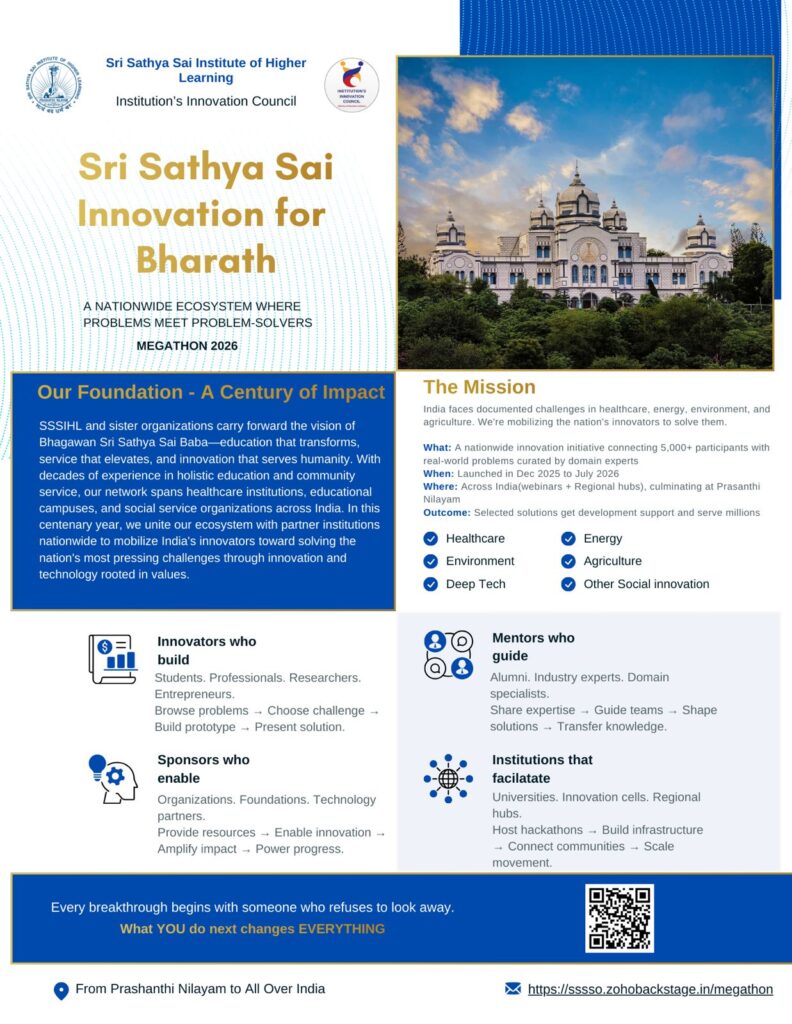
Want to Be Part of India’s Next Big Innovation Movement?
Join Sri Sathya Sai Innovation for Bharat – MEGATHON 2026, a nationwide platform bringing together innovators, mentors, and knowledge partners to solve real-world challenges.
Focus Areas: Healthcare | Energy | Environment | Agriculture | Deep Tech
🗓 December 2025 – June 2026
⭐ 100% Free Registration (All Categories)
More than a competition—this is innovation with purpose.
👉 Register here:
https://sssso.zohobackstage.in/megathon
📩 Queries: [email protected]
Megathon SSSIHL Innovation
Read MoreNational Start-up Day 2026 : Partner Institutions Presentation Summary
Strengthening the Innovation–Service Continuum through Integrated Ecosystems
The presentations by the Partner Institutions highlighted a defining strength of the Sri Sathya Sai ecosystem—the seamless integration of education, healthcare, research, and community service into a living innovation platform. Rather than treating innovation as an isolated academic activity, the session demonstrated how real-world problems, institutional depth, and value-based purpose converge to create meaningful, scalable societal impact.
The institutions presented were:
- Sri Sathya Sai Vidya Vahini
- Sri Sathya Sai General Hospitals (including Mobile Hospitals)
- Sri Sathya Sai Institute of Higher Medical Sciences, Prasanthigram
- Sri Sathya Sai Institute of Higher Medical Sciences, Whitefield
Together, these institutions illustrated how innovation rooted in service can move beyond prototypes into sustained societal solutions—while offering students, researchers, and innovators an unparalleled testbed for applied learning.
Sri Sathya Sai Vidya Vahini: Inclusive Education as a National Innovation Agenda
The presentation by Sri Sathya Sai Vidya Vahini positioned inclusive education as a critical innovation frontier. As a unit of the Sri Sathya Sai Central Trust, Vidya Vahini operates at national scale, delivering curriculum-aligned digital content, teacher training, and capacity-building programs fully aligned with the National Education Policy 2020, the National Curriculum Framework, and the UN Sustainable Development Goals.
Its reach spans the country through platforms such as DIKSHA, SWAYAM, NITI Aayog’s Aspirational Districts Programme, and Vidya Vahini’s own technology platforms—making it a powerful deployment partner for innovation emerging from academic ecosystems.
Innovation Focus: Children With Special Needs (CWSN)
A central theme of the presentation was inclusive design—developing solutions that work for children with mild and moderate disabilities while remaining equally effective for neurotypical learners. Vidya Vahini emphasized that inclusive education requires engaging not only teachers and students, but also parents, caregivers, and institutions as stakeholders in a shared ecosystem.
Key Deliverables Presented
1. Assistive Digital Applications
Vidya Vahini showcased the development of three core applications:
- A Story Builder
- “Dream and Draw” (mouse and motor-skill practice)
- A Typing Tutor
While similar tools exist in the market, these applications are being built specifically as CWSN-friendly, incorporating:
- Sensory-sensitive interfaces
- Adaptive interaction design
- Support for communication, social, and behavioral challenges
- Assistive technologies and accessibility-first logic
Crucially, these platforms will generate learning analytics and tracking data, enabling teachers, parents, and learners to identify focus areas and personalize interventions—turning digital learning into an evidence-driven support system.
2. Inclusive Activity Kits (Hands-on Learning)
Recognizing that learning cannot be purely digital, Vidya Vahini introduced hands-on activity kits designed for inclusive classrooms. Two major streams were highlighted:
- Celebrating Diversity Kits
- Festival-based learning modules
- Age-group aligned (not class-bound)
- Embedded Indian Sign Language (ISL) elements
- Fine motor, gross motor, coordination, coping, and social skill development
- Contextual storytelling, including Swami’s own initiation of festivals at Prasanthi Nilayam
- Subject-based Concept Application Kits
- Designed from pre-primary to higher secondary levels
- Focused on “learning by doing”
- Adapted for visual, hearing, locomotor, and neurodivergent needs
- Built using eco-friendly, low-cost materials suitable for rural schools
These kits demonstrated how inclusive innovation can be scalable, affordable, and pedagogically rigorous—while remaining deeply human-centric.
Vidya Vahini’s work was positioned as an open invitation to students and faculty to co-create, pilot, and scale solutions—particularly through collaborative platforms such as hackathons, applied research projects, and the upcoming Megathon, where inclusive education challenges offer strong translational potential.
Sri Sathya Sai Institute of Higher Medical Sciences, Prasanthigram: Research-Driven Healthcare Innovation
The presentation from Prasanthigram provided a concise but powerful glimpse into clinically anchored research and innovation. Emphasizing that hospitals are not merely care-delivery centers but rich research ecosystems, the speaker highlighted how persistent clinical challenges are being reframed as innovation opportunities.
Key domains included:
- Rheumatic Heart Disease: Investigating underlying causes and challenging existing assumptions through bioscience research
- Indigenous Medical Devices: The TTK Chitra heart valve as a landmark “Make in India” success long before the phrase became policy
- Coronary Artery Disease & Diabetes: Development of predictive models and early-detection biomarkers
- Orthopedics & Degenerative Disorders: Exploring restorative approaches alongside surgical interventions
- Rheumatoid Arthritis & Avascular Necrosis: Biomarker-driven early diagnosis
- Anesthesiology & Emergency Care: Handheld venous-access devices developed with alumni collaborators
- Microbiology: Rapid detection and prediction of antibiotic resistance patterns
A key message was the shift from reactive care to predictive, preventive healthcare, enabled by interdisciplinary collaboration between clinicians, scientists, engineers, and data specialists.
For students and researchers, this hospital-university interface represents a rare opportunity to work on problems where impact is immediate, measurable, and deeply human—a natural fit for innovation challenges and Megathon problem statements rooted in healthcare accessibility, diagnostics, and patient safety.
Sri Sathya Sai Institute of Higher Medical Sciences, Whitefield: Data, Devices, and Collaborative Research
The Whitefield presentation reinforced the idea that healthcare systems are among the richest generators of structured and unstructured data—much of which remains underutilized for innovation.
Key highlights included:
- Alumni-led innovations such as early digital imaging and archiving systems (pre-PACS era)
- Doctoral research emerging from hospital–university collaboration
- Custom surgical instruments and patient-specific cutting guides to improve orthopedic outcomes
- Administrative and workflow innovations to enhance hospital efficiency
A candid reflection was offered on the challenges of integrating research into high-intensity clinical environments. Heavy patient loads and traditional medical training models often limit research engagement. However, the presentation emphasized that this challenge itself is an innovation opportunity—calling for tools, processes, and collaborative frameworks that reduce friction between care delivery and research.
The Whitefield team clearly articulated openness to co-creation, inviting students, faculty, and innovation teams to engage in projects that improve patient care directly or indirectly through systems, analytics, and device innovation.
A Unified Ecosystem Advantage
A powerful closing reflection highlighted what makes this ecosystem unique:
the co-location of a values-driven university, world-class hospitals, national education platforms, and community outreach initiatives.
While many institutions are now attempting to replicate such integration, this ecosystem was envisioned and operationalized decades ago. The implication for students was explicit—this is not a theoretical advantage, but a practical one waiting to be activated.
Platforms such as the Institution’s Innovation Council, research foundations, and the upcoming Megathon serve as bridges—connecting student ideas to real institutional needs, real beneficiaries, and real implementation pathways.
Strategic Takeaway
The Partner Institutions presentations reframed innovation as:
- Problem-led, not technology-led
- Inclusive by design, not as an afterthought
- Rooted in service, yet scalable through systems
For aspiring innovators, researchers, and entrepreneurs, the message was unambiguous:
You are not starting from scratch. You are operating within a gold-mine ecosystem—one that offers real problems, real data, real infrastructure, and real impact.
The responsibility now lies in participation—bringing ideas into collaborative platforms like the Megathon, engaging with faculty and institutional partners, and converting this ecosystem advantage into solutions that serve humanity at scale.
Want to Be Part of India’s Next Big Innovation Movement?
Join Sri Sathya Sai Innovation for Bharat – MEGATHON 2026, a nationwide platform bringing together innovators, mentors, and knowledge partners to solve real-world challenges.
Focus Areas: Healthcare | Energy | Environment | Agriculture | Deep Tech
🗓 December 2025 – June 2026
⭐ 100% Free Registration (All Categories)
More than a competition—this is innovation with purpose.
👉 Register here:
https://sssso.zohobackstage.in/megathon
📩 Queries: [email protected]
Megathon SSSIHL Innovation
Read MoreNational Start-up Day 2026 : Alumni Panel Discussion Summary
Topic: One Size Doesn’t Fit All: Innovation and Entrepreneurship Models in Academic Setups
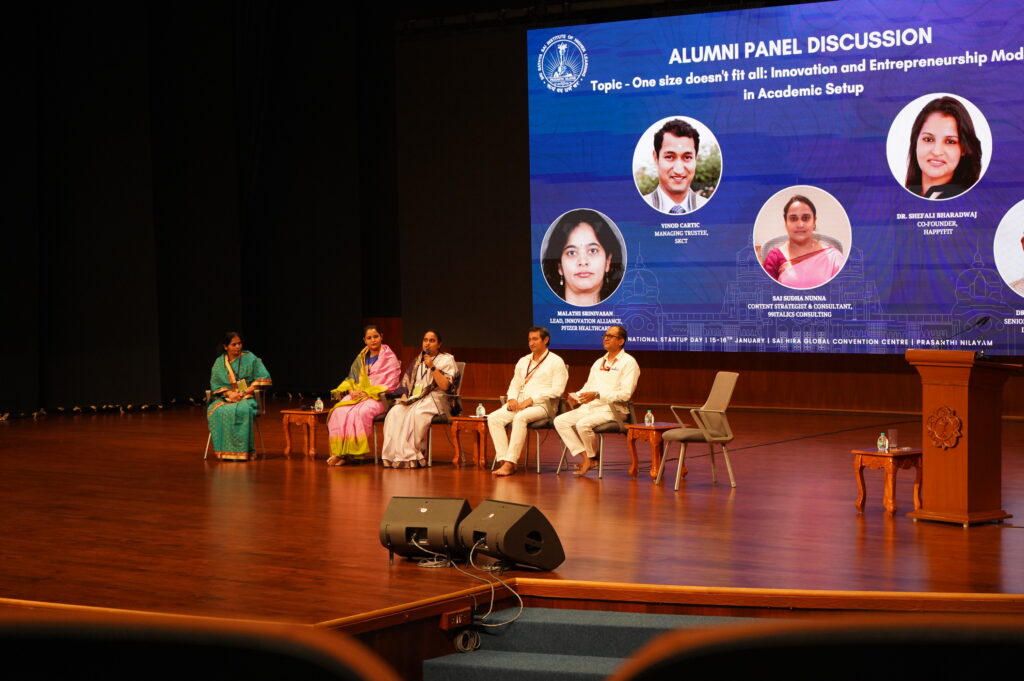
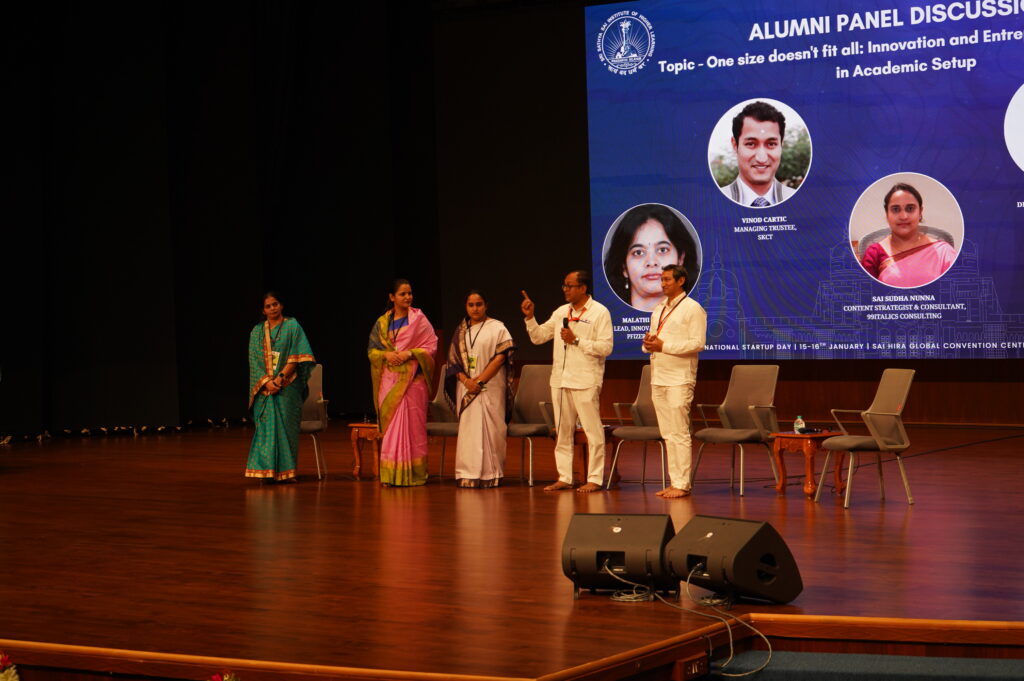
The Alumni Panel Discussion brought a grounded, experience-led dimension to National Startup Day by dismantling one of the most persistent myths surrounding entrepreneurship—that there is a single, linear path to innovation and success. Through diverse lived experiences across healthcare, education, corporate transformation, social enterprise, and innovation enablement, the panel demonstrated that entrepreneurship in academic ecosystems is plural, contextual, and deeply personal.
Moderated by Sai Sudha Nunna, Content Strategist and Consultant at 99italics Consulting, the session featured distinguished alumni representing distinct models of innovation:
- Malathi Srinivasan, Lead – Innovation Alliance, Pfizer
- Vinod Karthic, Managing Trustee, Sri Sai Krishna Charitable Trust
- Dr. Shefali Bharadwaj, Co-Founder, Happyfit
- Dr. Ramakrishnan R, Senior Faculty, School of Design Thinking
Together, they reframed innovation not as a race toward unicorn valuations, but as a spectrum of models shaped by purpose, capability, life stage, and societal need.
Breaking the Startup Stereotype
The discussion opened by challenging the dominant startup imagery—dropping out, building in garages, pitching to venture capitalists, and equating success with rapid scale. The moderator underscored that this narrative discourages many capable students from engaging with entrepreneurship at all. The panel’s collective intent was to dismantle this narrow framing and replace it with realistic, inclusive pathways.
Each panelist embodied a different entrepreneurial archetype: the service-based bootstrapper, the infrastructure-heavy social institution builder, the corporate intrapreneur, and the ecosystem enabler. This diversity itself became the central message—innovation does not demand uniformity.
Choosing the Right Model: Self-Awareness Before Scale
Dr. Shefali Bharadwaj articulated a model rooted in depth, credibility, and personal alignment. After over a decade of experience in food science, nutrition technology, and behavioral health, she consciously chose a bootstrapped, service-oriented entrepreneurship model. For her, success depended less on speed and more on trust, empathy, and sustained impact.
She highlighted that people-facing businesses—particularly in health and behavior change—cannot be rushed without diluting outcomes. Scaling prematurely risks losing the very essence of transformation. Her approach emphasized building strong foundations before expansion and designing a venture that evolves with life stages rather than against them.
A critical insight she offered was the need for guided inner exploration at the university level. Tools such as aptitude assessments, personality mapping, and reflective exercises could help students identify what they are naturally inclined toward—front-end engagement, backend systems, or strategic design—thereby accelerating clarity and reducing years of trial-and-error.
Infrastructure-Heavy Models and the Role of Trust
Vinod Karthic presented a contrasting model—one deeply embedded in infrastructure, governance, and community engagement. Building schools, healthcare programs, and skilling initiatives across villages requires credibility, regulatory navigation, and sustained stakeholder trust.
He emphasized that in social entrepreneurship, purpose must remain higher than profit. Working with government bodies, parents, communities, and donors demands transparency and ethical consistency. Drawing from large-scale rural interventions—including crisis response during the COVID-19 pandemic—he reinforced that values, governance, and collaboration are not optional; they are operational necessities.
Importantly, he reframed entrepreneurship as working with money for something higher than money. This mindset, cultivated during his education, enabled him to sustain long-term initiatives even when progress was slow or outcomes were uncertain.
When Corporations Become Startups
Dr. Ramakrishnan R offered a compelling intrapreneurial perspective, illustrating how entrepreneurship is equally relevant within mature organizations. He recounted the transformation of a large, listed services company into a product-led global enterprise—an exercise that demanded vulnerability, risk-taking, and the courage to abandon established comfort zones.
This transition, he explained, mirrored startup dynamics in mindset if not in funding. Letting go of a stable “cash cow” to build proprietary intellectual property required leadership willing to embrace uncertainty. His experience highlighted that entrepreneurship is fundamentally about mindset, not company size.
He further emphasized that expertise can become a trap if it blinds innovators to real customer needs. Technology is not always the solution; sometimes, simpler systemic or logistical interventions create greater value. Understanding the human behind the problem is critical.
The Ecosystem Enabler’s Lens
Malathi Srinivasan brought a panoramic view from her work with incubators, research parks, and innovation alliances. She stressed that before dreaming of startups, students must address essential “checkpoints”: clarity of idea, risk appetite, competitive awareness, and long-term vision.
She observed that many early-stage founders struggle not because of weak ideas, but due to low resilience and an inability to absorb failure. In contrast, students from Sri Sathya Sai Institute of Higher Learning exhibit a distinctive strength—emotional resilience anchored in values. This, she noted, is a powerful competitive advantage that should be consciously leveraged rather than understated.
What Makes SSIHL Students Entrepreneurial?
A recurring theme was the institution’s self-reliance culture. From managing hostels and stores to participating in village service programs, students are exposed early to real-world systems. These experiences cultivate practical skills—logistics, budgeting, stakeholder management—that classrooms alone cannot teach.
The panel articulated a simple but powerful framework learned through service:
Listening, Observation, Research, and Dialogue—skills essential for customer discovery and problem-solving. These capabilities, developed organically through campus life, position students uniquely for entrepreneurship.
Defining Success Beyond Sustainability
When addressing venture success, the panel moved beyond financial metrics. Vinod Karthic summarized success as:
- Purpose over profit
- Mission over money
- Teams over titles
- Values over victory
This reframing resonated strongly across the discussion. Sustainable impact, ethical consistency, and long-term relevance were positioned as more meaningful indicators than short-term scale.
Dr. Shefali added that incubation must extend beyond ideas to incubating people—helping founders manage ego, self-doubt, comparison, pressure, and identity. Entrepreneurship demands inner resilience as much as external strategy.
Actionable Recommendations for Universities
The panel converged on several clear, implementable recommendations:
- Mandatory entrepreneurial mindset modules across disciplines
- Structured inner exploration and psychometric assessments
- Early exposure to regulatory and governance mentoring
- Safe spaces to test, fail fast, and redefine success
- Alumni-led mentoring with structured recognition and respect for time
These suggestions align closely with institutional platforms such as the Institution’s Innovation Council and ongoing initiatives designed to lower friction for student innovators.
From Insight to Action: The Megathon Opportunity
The session concluded with a strong call to action. Students were encouraged to identify one issue that genuinely disturbs them, articulate it in a single sentence, and take the first step toward validation. Platforms such as the upcoming Megathon were highlighted as practical entry points—spaces not just to compete, but to explore, collaborate, and learn within a supportive ecosystem.The emphasis was clear: participation is less about winning and more about beginning.
Want to Be Part of India’s Next Big Innovation Movement?
Join Sri Sathya Sai Innovation for Bharat – MEGATHON 2026, a nationwide platform bringing together innovators, mentors, and knowledge partners to solve real-world challenges.
Focus Areas: Healthcare | Energy | Environment | Agriculture | Deep Tech
🗓 December 2025 – June 2026
⭐ 100% Free Registration (All Categories)
More than a competition—this is innovation with purpose.
👉 Register here:
https://sssso.zohobackstage.in/megathon
📩 Queries: [email protected]
Megathon SSSIHL Innovation
Read MoreNational Start-up Day 2026 : Benediction Summary
Bhagawan Sri Sathya Sai Baba
The Benediction offered by Bhagawan Sri Sathya Sai Baba formed the philosophical and ethical core of National Startup Day, anchoring the discourse on innovation and entrepreneurship in timeless principles of truth, responsibility, and inner alignment. Rather than addressing enterprise in transactional or economic terms, the Benediction elevated the conversation to first principles—placing the human being, their consciousness, and their intentions at the center of all action.
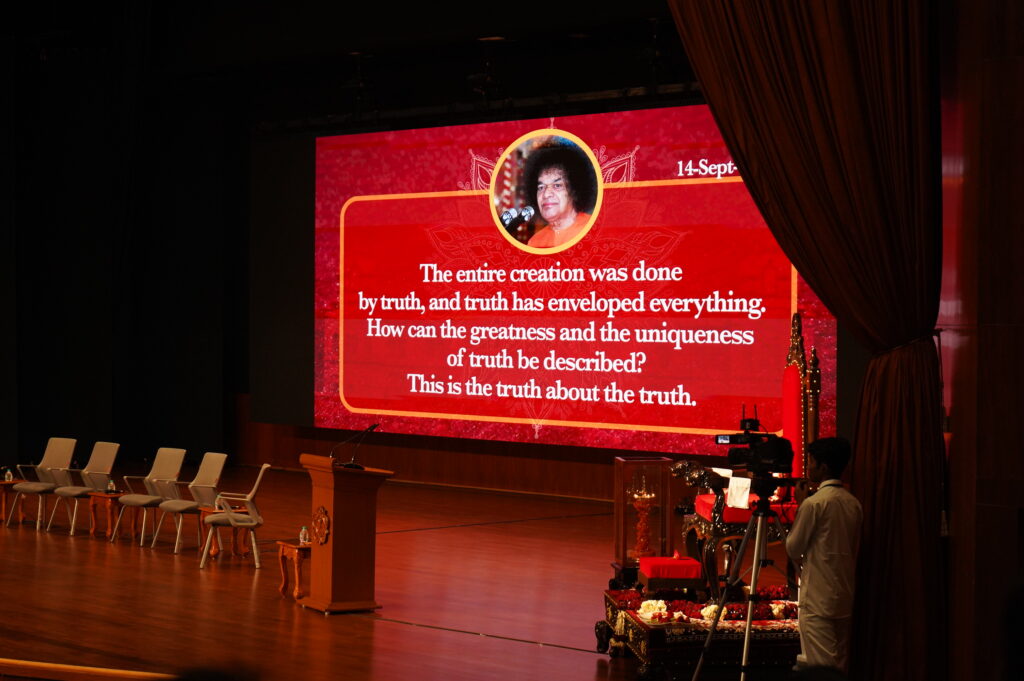
At the heart of the message was Truth—described not as a changing construct shaped by time, history, or circumstance, but as an unalterable, all-encompassing reality. Truth, Bhagawan emphasized, neither expands nor diminishes with creation; it simply is. This unchanging nature of truth was presented as the foundation of Indian culture and civilization—a culture that derives its strength not from external achievements alone, but from fidelity to enduring values.
This framing is particularly significant in the context of entrepreneurship and innovation. In a world driven by rapid technological change, shifting markets, and short-term metrics, the Benediction served as a reminder that sustainable creation must rest on principles that do not fluctuate with trends. Innovation that is not aligned with truth, Bhagawan implied, may achieve temporary success but lacks the stability and integrity required for lasting impact.
To make this idea tangible, Bhagawan drew an analogy from the human body—describing it as an extraordinarily sophisticated system composed of diverse limbs, thoughts, experiences, and activities. Each component performs a specific role, yet the body functions effectively only because of mutual cooperation, coordination, and communication. No limb acts in isolation; health and efficiency emerge from harmony among parts.
This analogy was not merely biological—it was managerial, organizational, and societal. The human body, constituted of atoms and systems working in unison, demonstrates a universal principle: systems thrive when individual units understand their role and cooperate with others toward a shared purpose. In the context of institutions, startups, or innovation ecosystems, this insight translates directly into how teams are formed, how responsibilities are distributed, and how collective outcomes are achieved.
Bhagawan explicitly connected this idea to concepts of communication and management, noting that while modern management thinkers—such as Peter Drucker—have articulated frameworks for business and organizational effectiveness, there remains a deeper dimension often overlooked. Contemporary management, he observed, tends to focus predominantly on the object—the task, the output, the result. In contrast, Bhagawan emphasized the primacy of the subject—the individual who performs the action.
According to this perspective, no activity can be fully understood or effectively executed unless the subject is first understood. The person undertaking an action must clearly analyze and reflect upon their own thoughts, intentions, motivations, decisions, and values. This inward clarity precedes outward effectiveness. Only when the subject is aligned internally can the object—the work, the goal, the enterprise—be approached with decisiveness, coherence, and responsibility.
This distinction between subject and object carries profound implications for entrepreneurship. Ventures often focus intensely on products, markets, valuations, and scalability. The Benediction redirected attention to the inner state of the entrepreneur. Without clarity of intention, ethical grounding, and self-awareness, even well-designed initiatives risk fragmentation or misdirection. Conversely, when the subject is anchored in truth and purpose, decision-making becomes naturally aligned, transparent, and resilient.
Bhagawan further emphasized the importance of clear articulation and communication. Ideas, goals, and intentions, he noted, must be explained in a manner that is intelligible, honest, and convincing to all stakeholders—workers, collaborators, and participants alike. Only when people clearly understand why an activity is being undertaken and what it seeks to achieve can they participate with conviction and enthusiasm.
This insight resonates strongly with contemporary innovation ecosystems, where collaboration across disciplines, hierarchies, and institutions is essential. Whether in startups, research teams, or social enterprises, clarity of purpose and communication ensures alignment, trust, and sustained engagement. Ambiguity at the level of intention often manifests as inefficiency or conflict at the level of execution.
Taken together, the Benediction presented a coherent philosophy of action:
- Truth as the unchanging foundation
- Self-understanding as the prerequisite for leadership
- Cooperation and communication as the basis of effective systems
- Clarity of intention as the driver of meaningful outcomes
Within the broader context of National Startup Day, this message reframed entrepreneurship as a deeply human endeavor. Startups, innovation challenges, and institutional initiatives are not merely mechanisms for economic activity; they are expressions of human consciousness in action. Their quality, impact, and sustainability depend on the inner alignment of those who lead and participate in them.
This perspective is particularly relevant for students and young innovators engaging with platforms such as institutional innovation councils, hackathons, and the upcoming Megathon. Such initiatives are not only opportunities to test ideas or build prototypes; they are spaces where individuals can examine their motivations, learn to work cooperatively, communicate clearly, and align personal purpose with collective goals. When approached in this spirit, participation itself becomes a formative experience—shaping not just ventures, but values.
The Benediction thus served as a quiet yet powerful counterbalance to the technical and strategic discussions of the event. It reminded participants that innovation divorced from ethics is incomplete, and growth disconnected from inner clarity is unstable. By placing the subject—the human being—before the object—the enterprise—Bhagawan Sri Sathya Sai Baba articulated a model of entrepreneurship that is not only effective, but also elevating.
In essence, the Benediction reaffirmed that when truth guides intention, and intention guides action, creation naturally serves society. For an institution and ecosystem committed to value-based education and responsible innovation, this message remains not only relevant, but essential—especially as students step forward to engage with emerging opportunities and shape solutions for the future.
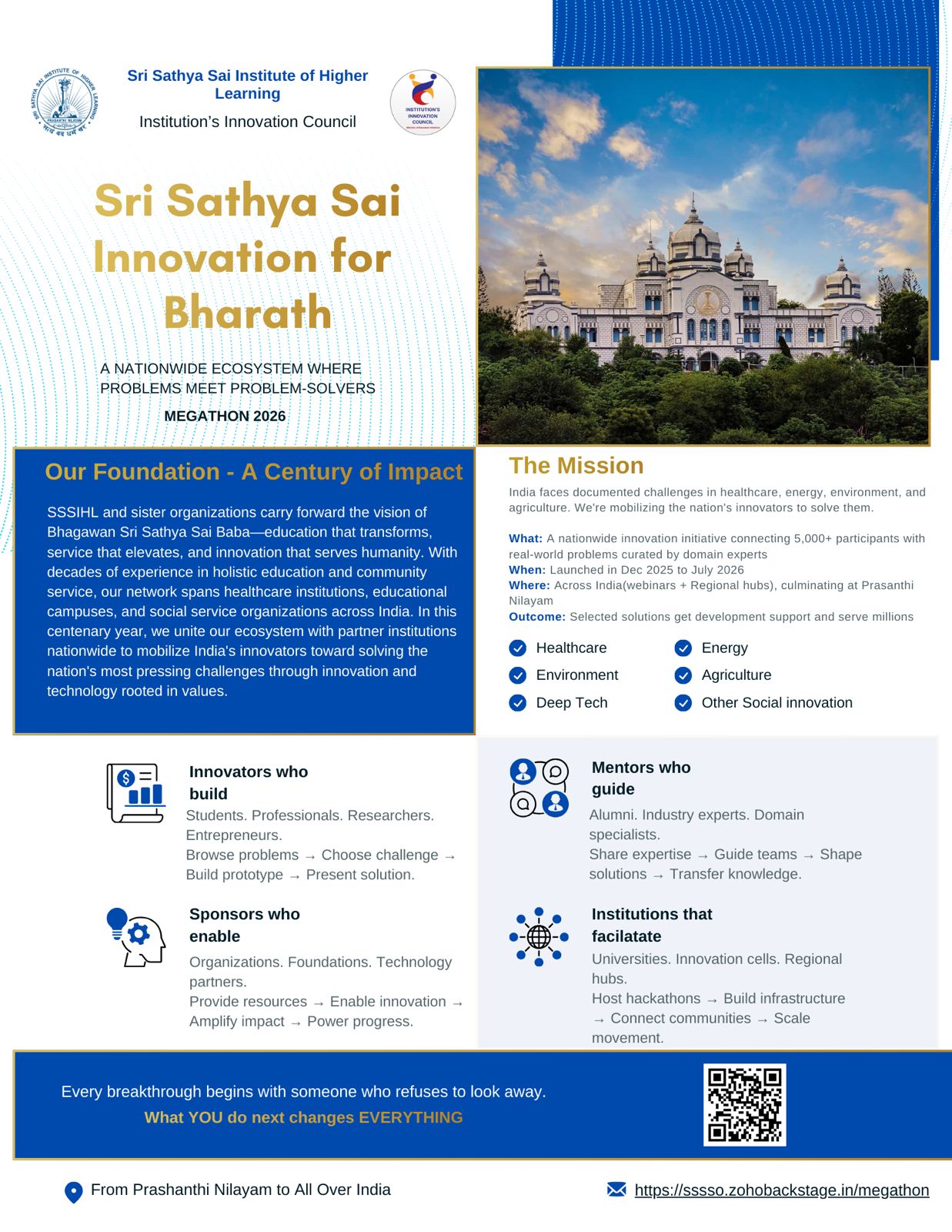
Want to Be Part of India’s Next Big Innovation Movement?
Join Sri Sathya Sai Innovation for Bharat – MEGATHON 2026, a nationwide platform bringing together innovators, mentors, and knowledge partners to solve real-world challenges.
Focus Areas: Healthcare | Energy | Environment | Agriculture | Deep Tech
🗓 December 2025 – June 2026
⭐ 100% Free Registration (All Categories)
More than a competition—this is innovation with purpose.
👉 Register here:
https://sssso.zohobackstage.in/megathon
📩 Queries: [email protected]
Megathon SSSIHL Innovation
Read MoreNational Start-up Day 2026 : Chief Guest Address Summary
Dr. Sethuraman Panchanathan
Former Director, U.S. National Science Foundation | University Professor of Technology and Innovation, Arizona State University | Padma Shri Awardee (2025)
Dr. Sethuraman Panchanathan’s address stood out as a deeply experiential, insight-driven exposition on what it truly means to cultivate an entrepreneurial mindset—moving far beyond the narrow definition of startups and venture creation. Drawing from his global leadership experience across academia, national science policy, and innovation ecosystems, he positioned entrepreneurship as a fundamental human capability rooted in curiosity, exploration, and responsibility.
He began by affirming the collective role of institutions, faculty, alumni, and students in shaping outcomes larger than individual success. Emphasizing that transformative change is never the result of isolated brilliance, he underscored the idea that purpose flows through people differently—but with equal potential. This framing established a powerful premise: entrepreneurship is not reserved for a gifted few; it is embedded in everyone and must be consciously nurtured.
To illustrate this, Dr. Panchanathan traced the origins of entrepreneurship to human curiosity itself. From infancy, he explained, exploration defines how individuals interact with the world—touching, observing, questioning, and learning. This exploratory instinct, he argued, is the foundation of the entrepreneurial mindset. The responsibility of educational institutions, therefore, is not to manufacture entrepreneurs artificially, but to protect, cultivate, and channel this innate curiosity into meaningful problem-solving.
He reinforced this argument through a compelling example from his time at Arizona State University, where he helped create an initiative designed to enable students to work collaboratively on problems they genuinely cared about. The emphasis was not on credentials or hierarchy, but on self-assembled, interdisciplinary teams. He recounted how a simple concern expressed by a student—feeling unsafe while commuting on campus—became the starting point for an innovative solution. Undergraduate students from electrical engineering, computer science, mechanical engineering, design, and public policy came together to conceptualize, design, regulate, and prototype a drone-based safety escort system. The success of this project, he noted, did not lie merely in the technology, but in the process: curiosity-led problem identification, interdisciplinary collaboration, regulatory awareness, and sustained execution.
From this narrative, Dr. Panchanathan distilled a critical insight: entrepreneurial capability is not domain-specific. Engineers, designers, policymakers, and researchers all contribute uniquely when the environment allows them to do so. More importantly, such innovation ecosystems must be accessible to all students—not just those who self-identify as entrepreneurs.
Turning his focus to curriculum and institutional responsibility, he urged academic leaders to integrate entrepreneurial mindset training across disciplines. He clarified that this does not imply that every student must start a company. Rather, entrepreneurial thinking enhances professional effectiveness across roles—producing better engineers, better policymakers, better designers, and more adaptive leaders, especially in an era increasingly shaped by artificial intelligence. According to him, failing to explore this mindset during one’s academic journey represents a missed opportunity with long-term consequences.
A central highlight of his address was a structured framework he referred to as the “Ten I’s” of entrepreneurship—a practical roadmap for translating ideas into impact. The first, he explained, is Idea. Every entrepreneurial journey begins with an idea, often emerging spontaneously from daily life. However, excitement alone is insufficient. The second “I” is Innovation, which requires validating whether the idea is genuinely novel. In today’s context, he noted, tools such as AI platforms can assist in quickly assessing whether similar solutions already exist.
Yet, novelty alone does not justify venture creation. This led to the third “I”: Impact. Dr. Panchanathan was explicit in cautioning against equating academic success—such as publications or patents—with startup viability. Through a candid personal anecdote involving his own NSF-funded research idea, he described how rigorous customer discovery processes revealed uncomfortable truths about market relevance. Participation in structured programs such as the NSF Innovation Corps and lean launchpad models forced him to confront the gap between technical merit and real-world value. This humbling experience, he emphasized, is essential for any aspiring entrepreneur.
Once impact is validated, the next step is Implementation. Ideas that remain theoretical or confined to paper have limited value in entrepreneurial contexts. Creating prototypes and minimum viable products (MVPs) is non-negotiable. He reminded the audience that implementation does not require perfection; it requires commitment to learning through building.
However, implementation is impossible without Infrastructure, the fifth “I”. Dr. Panchanathan highlighted how access to institutional resources—labs, fabrication spaces, computing facilities, research centers, and domain-specific infrastructure—can dramatically lower barriers to innovation. He acknowledged that students at Sri Sathya Sai Institute of Higher Learning are uniquely positioned due to the presence of structured support systems such as the Institution’s Innovation Council and the research and innovation foundation.
The sixth “I,” Immediacy, addressed the importance of speed. In startup ecosystems, time is a competitive variable. Ideas lose relevance if execution is delayed. He cautioned against prolonged perfectionism, stressing the need to act decisively while learning iteratively.
Closely related is the seventh “I,” Intensity. Entrepreneurship, he asserted, is not a part-time endeavor. Whether undertaken by students or faculty, it demands sustained focus, energy, and intentional effort. Without intensity, even well-funded and well-conceived ideas falter.
The eighth “I,” Investment, broadened the conversation to funding pathways. Drawing from his experience at the U.S. National Science Foundation, Dr. Panchanathan illustrated how public funding mechanisms such as SBIR and STTR programs have historically seeded transformative companies—citing examples such as Google, Qualcomm, and leading synthetic biology firms. He emphasized that investment can come from multiple sources: governments, institutions, angel investors, and venture capital. Awareness of these pathways is as important as technical competence.
The ninth “I” focused on India’s Moment. He contextualized entrepreneurship within India’s national trajectory, referencing the country’s rapid rise in global startup growth and the broader vision of long-term national development. He highlighted the increasing emphasis on job creation rather than job acquisition, noting that this shift represents a structural opportunity for India’s youth. State-level visions, including ambitious goals of fostering entrepreneurship at the household level, further reinforce this momentum.
The final “I” was Immersion, which he described as uniquely powerful at Sri Sathya Sai Institute of Higher Learning. He pointed to the institution’s value-driven legacy, rural context, integrated ecosystem of hospitals, universities, and community projects, and the profound opportunity this creates for identifying underserved problems in health, education, sustainability, and social development. This immersion, he argued, provides a living laboratory for socially relevant innovation rarely available elsewhere.
Throughout his address, Dr. Panchanathan repeatedly returned to a central theme: belief. Transformational outcomes emerge when students and faculty believe in their capacity to act, apply themselves with discipline, and follow structured pathways from idea to impact. He reinforced this through global examples of NSF-funded innovations that evolved into multi-billion-dollar enterprises and life-changing technologies—outcomes that began with students and early-career researchers willing to test their ideas.
He concluded by bringing the message back to the present context, encouraging students to actively engage with institutional platforms such as the Institution’s Innovation Council and upcoming initiatives like the Megathon. Such forums, he noted, are not merely competitive events but accelerators of mindset—spaces where curiosity, collaboration, speed, and responsibility converge. Participation in these initiatives is a concrete way for students to translate inspiration into action.
Dr. Panchanathan’s address ultimately reframed entrepreneurship as a disciplined expression of human potential—grounded in curiosity, sharpened by validation, enabled by infrastructure, and guided by values. His message was clear: the moment is now, the ecosystem is ready, and the responsibility to act rests with each individual willing to explore, build, and serve.
Want to Be Part of India’s Next Big Innovation Movement?
Join Sri Sathya Sai Innovation for Bharat – MEGATHON 2026, a nationwide platform bringing together innovators, mentors, and knowledge partners to solve real-world challenges.
Focus Areas: Healthcare | Energy | Environment | Agriculture | Deep Tech
🗓 December 2025 – June 2026
⭐ 100% Free Registration (All Categories)
More than a competition—this is innovation with purpose.
👉 Register here:
https://sssso.zohobackstage.in/megathon
📩 Queries: [email protected]
Megathon SSSIHL Innovation
Read MoreNational Start-up Day 2026 : Inaugural Address Summary
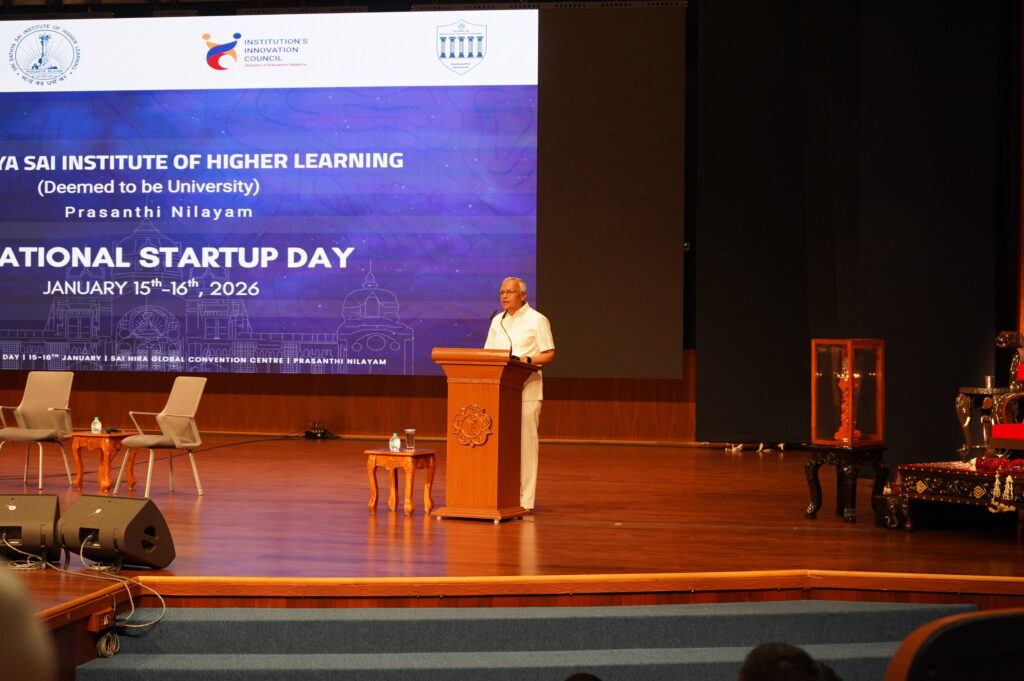
Prof. B. Raghavendra Prasad, Vice Chancellor, Sri Sathya Sai Institute of Higher Learning
Prof. B. Raghavendra Prasad’s address on National Startup Day (15–16 January) set the intellectual and ethical tone for the two-day engagement, positioning innovation and entrepreneurship not as standalone pursuits, but as natural outcomes of a deeper educational philosophy. Speaking as both an academic leader and a scientist with decades of experience in advanced research ecosystems, he framed the event as a celebration of innovation rooted in purpose, responsibility, and service to society.
He began by situating the occasion within the spiritual and institutional ethos of Sri Sathya Sai Institute of Higher Learning (SSSIHL), recalling the founding vision of the institution—education that transforms the intellect, ennobles the heart, and empowers individuals to serve selflessly. This vision, he emphasized, is not symbolic but operational. Every academic, research, and entrepreneurial initiative at SSSIHL is designed to translate knowledge into societal good. In this context, National Startup Day was not merely commemorative; it was a reaffirmation of the Institute’s long-standing commitment to application-oriented learning and value-driven innovation.
Placing SSSIHL within the broader national landscape, Prof. Prasad drew clear alignment between the institution’s philosophy and India’s contemporary policy framework. He referenced key Government of India initiatives such as Startup India, Atmanirbhar Bharat, Make in India, and the National Education Policy 2020. Collectively, these initiatives aim to transform India into a knowledge-driven, innovation-led economy, with higher education institutions acting as catalytic hubs where teaching, research, and entrepreneurship intersect. According to Prof. Prasad, SSSIHL views this mandate not as a policy obligation but as a natural extension of its founding ideals—where learning must culminate in action, and action must serve national and societal priorities.
A central theme of his address was the shift from employment-seeking to employment-creating mindsets among India’s youth. Long before this became a national narrative, he noted, the institution’s founder consistently emphasized that students must emerge as job providers rather than job seekers. Today, with India witnessing a reversal of historic brain drain and a surge in domestic opportunities, this philosophy has gained renewed relevance. Prof. Prasad highlighted that the current ecosystem empowers students not only to aspire for meaningful roles but to create them—designing solutions, building enterprises, and recruiting talent aligned with their vision.
He then offered a detailed overview of SSSIHL’s innovation ecosystem, anchored by two complementary pillars: the Institution’s Innovation Council (IIC) and the Sri Sathya Sai Research and Innovation Foundation (SSSRIF). Together, these entities operationalize the Institute’s approach to entrepreneurship by integrating awareness, ideation, mentoring, research translation, and commercialization into a unified framework.
The Institution’s Innovation Council, he explained, functions as the primary engagement platform for students across disciplines. Its activities include structured awareness programs on innovation and startups, ideation workshops, boot camps, hackathons, and idea challenges aligned with the Startup India framework. A distinctive strength of the IIC lies in its interdisciplinary orientation—bringing together students from science, management, humanities, and technology to collaborate on real-world problems. This cross-pollination, Prof. Prasad noted, is critical for developing solutions that are technically sound, market-aware, and socially relevant.
Mentorship forms another core dimension of the IIC’s work. Industry experts, startup founders, alumni, and ecosystem partners actively guide students, helping them refine ideas, understand market realities, and navigate the early stages of venture creation. Importantly, the Council emphasizes experiential learning—encouraging proof-of-concepts, prototypes, and minimum viable products (MVPs). Through this hands-on exposure, students internalize that innovation is not defined by disruption or valuation alone, but by relevance, responsibility, and impact.
Complementing the IIC is the Sri Sathya Sai Research and Innovation Foundation, a Section 8 company supported by the broader Sri Sathya Sai institutional ecosystem. Prof. Prasad highlighted its role in advancing faculty- and student-driven research with strong translational and startup potential. The Foundation actively supports intellectual property creation, including invention disclosures, patents, and technology transfers, while encouraging deep-tech and research-led startups aligned with national priorities such as Atmanirbhar Bharat.
He underscored that SSSRIF’s work extends beyond commercialization. By enabling collaborations with industry, government agencies, and national research missions, the Foundation ensures that innovation at SSSIHL remains connected to real-world needs. Strategic focus areas include healthcare technologies, sustainability, advanced materials, data sciences, and agri-tech—domains where scientific advancement can directly enhance societal well-being. Across these efforts, Prof. Prasad stressed that ethical grounding, inclusiveness, and human welfare remain non-negotiable principles guiding technological progress.
Reflecting on the Institute’s startup culture, he described it as fundamentally value-centric. Startups emerging from SSSIHL are expected to be professionally competent and intellectually rigorous, yet equally ethical, socially conscious, and compassionate in action. Economic growth, in this framework, is not an end in itself but a means to achieving social harmony, environmental sustainability, and national well-being. This perspective distinguishes SSSIHL’s entrepreneurial ecosystem from purely market-driven models and reinforces its role as a responsible contributor to India’s innovation landscape.
Addressing students directly, Prof. Prasad spoke of the unprecedented opportunities characterizing the current era. Drawing from his own academic journey, he contrasted earlier periods—when limited domestic opportunities forced many talented individuals abroad—with today’s environment, where students can create pathways aligned with their capabilities and aspirations. At SSSIHL, he assured, no idea goes unheard. Every concept is given due consideration, refined where necessary, and supported through mentorship and institutional mechanisms to improve its viability and impact.
In this context, he encouraged students to actively engage with upcoming platforms that translate ideas into action. Initiatives such as the forthcoming Megathon were positioned as critical opportunities for students to test their thinking, collaborate across disciplines, and experience the rigour of problem-solving under real constraints. Participation, he implied, is not merely about competition but about immersion—learning how innovation evolves from insight to implementation within a supportive ecosystem.
Concluding his address, Prof. Prasad expressed appreciation for faculty members, innovation leaders, mentors, alumni, and students who continuously strengthen the Institute’s entrepreneurial environment. He articulated a clear aspiration: that SSSIHL’s startup and innovation ecosystem should evolve into a role model for the country, much like its academic programs. With innovation serving humanity, research addressing national priorities, and entrepreneurship guided by enduring values, he envisioned the institution as a beacon of hope within India’s broader startup ecosystem.
His address effectively framed National Startup Day not as an isolated celebration, but as a reaffirmation of SSSIHL’s integrated approach to education, research, and entrepreneurship—an approach where innovation is purposeful, entrepreneurship is responsible, and participation in initiatives like the upcoming Megathon becomes a meaningful step toward nation-building.
Want to Be Part of India’s Next Big Innovation Movement?
Join Sri Sathya Sai Innovation for Bharat – MEGATHON 2026, a nationwide platform bringing together innovators, mentors, and knowledge partners to solve real-world challenges.
Focus Areas: Healthcare | Energy | Environment | Agriculture | Deep Tech
🗓 December 2025 – June 2026
⭐ 100% Free Registration (All Categories)
More than a competition—this is innovation with purpose.
👉 Register here:
https://sssso.zohobackstage.in/megathon
📩 Queries: [email protected]
Megathon SSSIHL Innovation
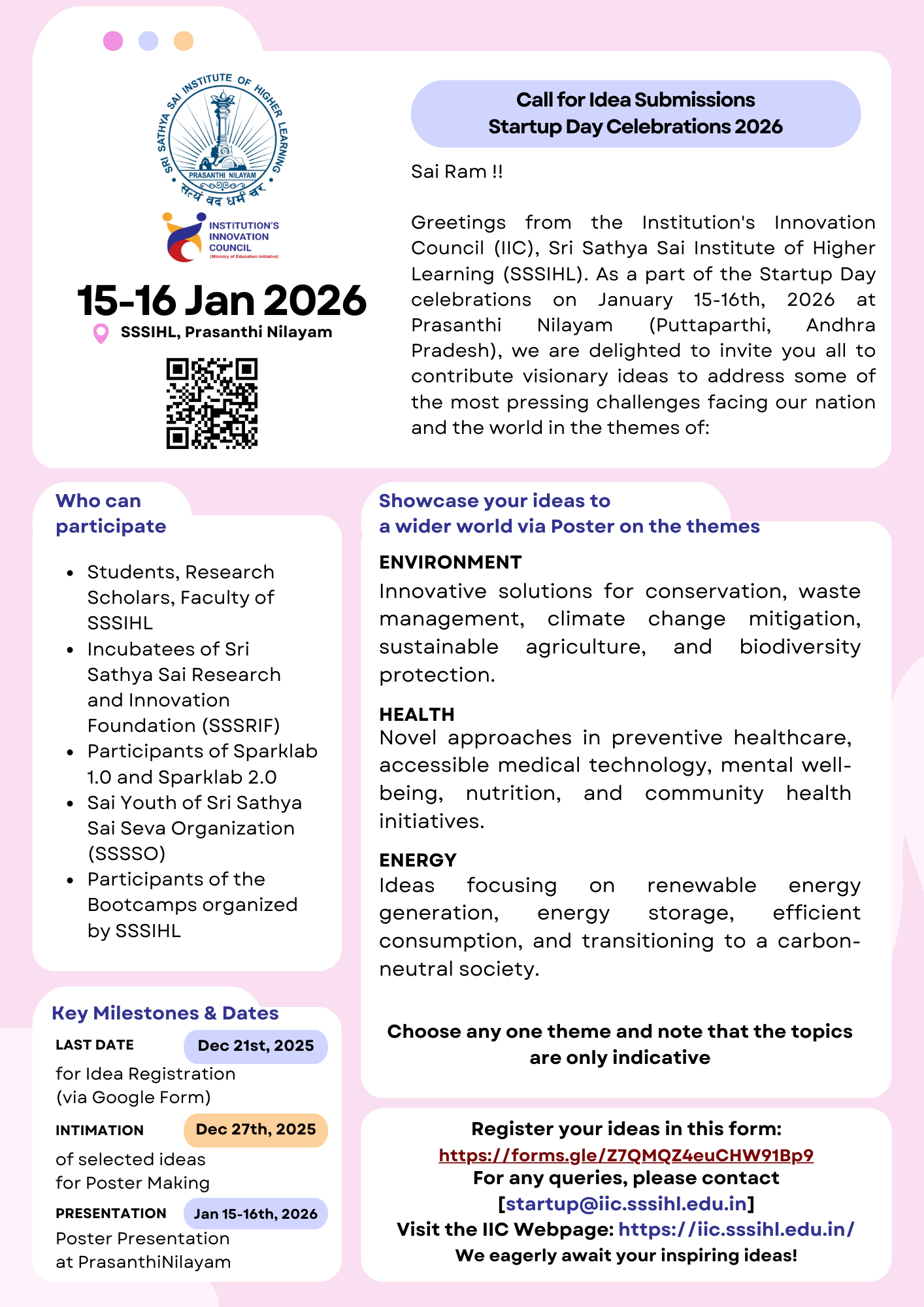
Read MoreCall for Idea Submissions – Annual Startup Day Celebrations 2026 SSSIHL-IIC
Register your Idea by scanning the QR Code or Click on the Register your Idea Button
Sparklabs 2.0 Valedictory Function & Immersion Program 13th – 14th Dec, 2025
SPARKLAB 2.0 – Immersion Program & Valedictory Ceremony – A Report
Dates: 13–14 December 2025
Venue: Prasanthi Nilayam Campus, SSSIHL
SPARKLAB 2.0 successfully concluded as a two-day high-impact immersion program with a meaningful Valedictory Ceremony, marking the culmination of a journey that began on 18 August 2025.
Day 1 Highlights | 13 December 2025
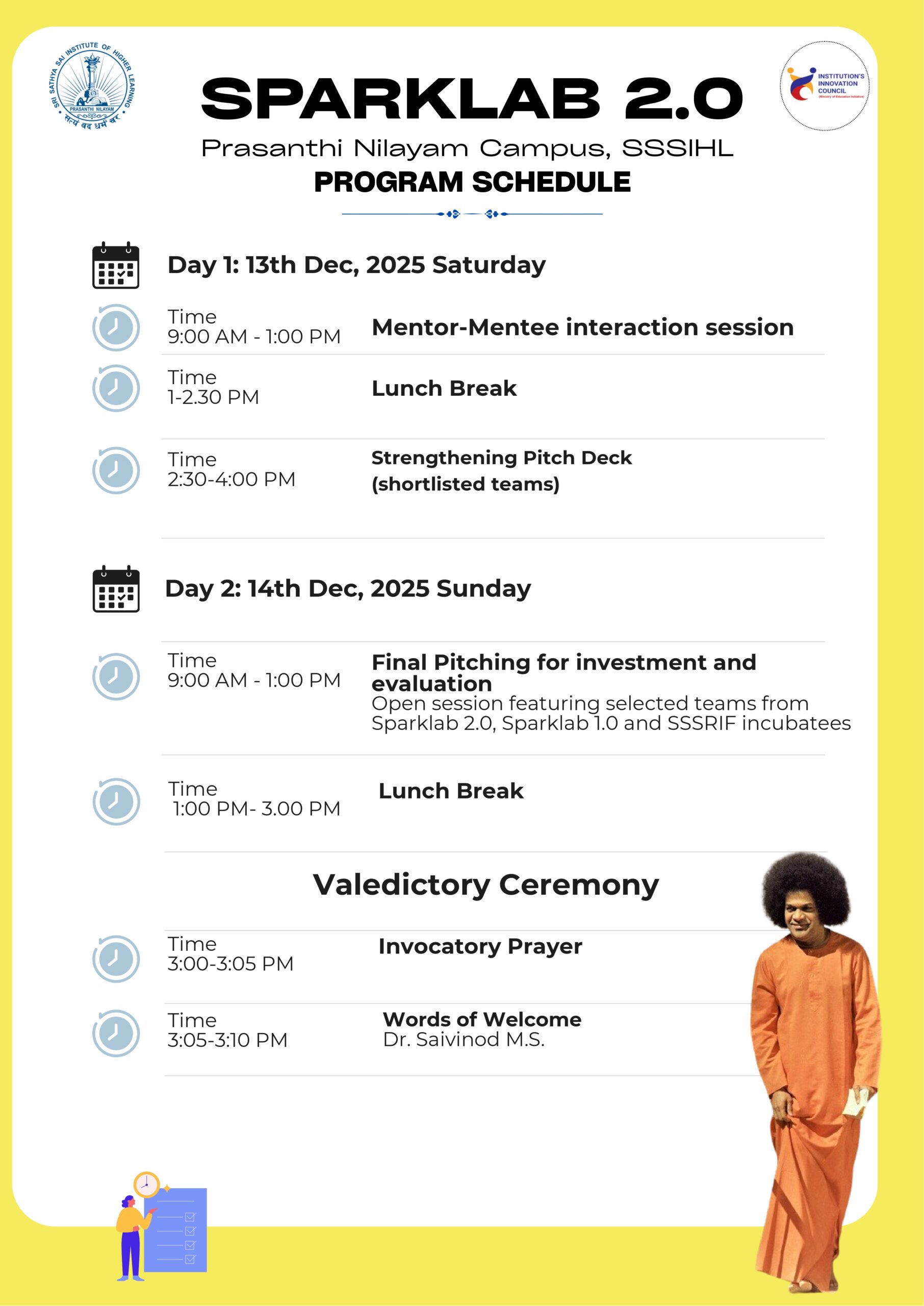
The program commenced with invocatory Vedam chanting, setting a spiritual and purposeful tone, followed by a Welcome Address by Prof. Pallav Kumar Baruah, President, IIC-SSSIHL. Prof. Baruah also provided an overview of “Megathon: Sri Sathya Sai Innovation for Bharat”, a nationwide hackathon scheduled for February–April 2026. He emphasized that Megathon 2026 aims to ignite grassroots innovation across India, with focus areas in Healthcare, Environment, and Energy.
The formal launch of Megathon was led by the respected Vice-Chancellor, Prof. B. Raghavendra Prasad, who highlighted the growing role of the SSSIHL alumni network in supporting innovation-driven initiatives. He emphasized how alumni, industry experts, investors, and mentors are coming together to offer time, expertise, and resources to nurture young innovators. He reassured participants that SSSIHL, through SPARKLAB and SSSRIF, remains committed to guiding innovators from ideation to execution and beyond.
The afternoon session featured intensive one-to-one mentor–mentee interactions, where shortlisted teams received focused guidance on business models, market readiness, impact alignment, and pitch refinement.
Day 2 Highlights | 14 December 2025
The second day began with the Final Pitching Session for Investment and Evaluation, where 16 selected teams from SPARKLAB 2.0, SPARKLAB 1.0, and SSSRIF incubatees presented their ideas before an expert evaluation panel. The session encouraged cross-cohort learning and exposed participants to diverse innovation approaches across sectors.
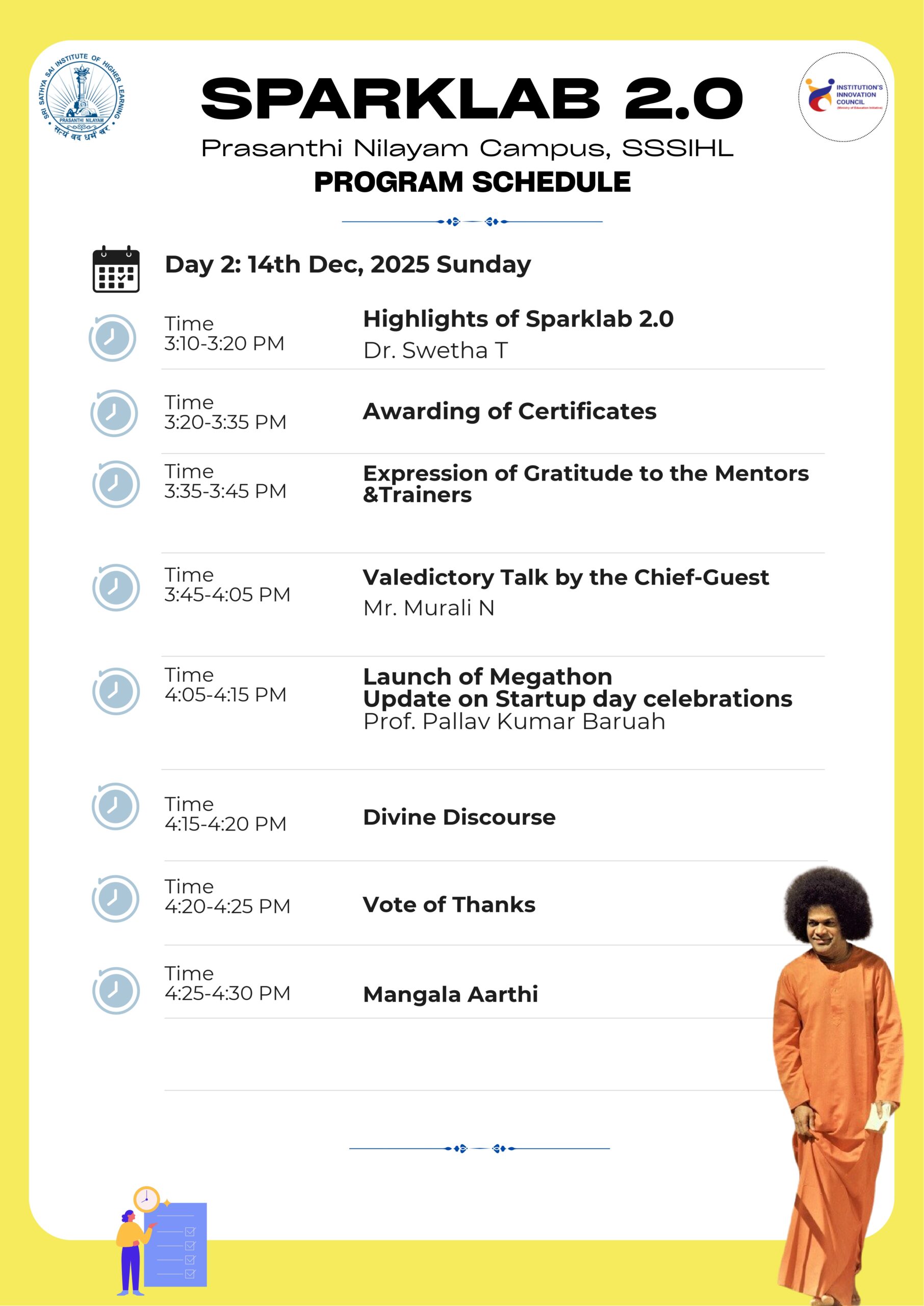
The Valedictory Ceremony, held in the afternoon, included:
• Invocation and Welcome
• Program highlights showcasing outcomes and impact
• Reflections shared by participants, mentors, and trainers
• Distribution of certificates to successful participants
• Expression of gratitude to mentors and trainers
• Valedictory Address by the Chief Guest, Mr. Murali Narasimhan
• Announcements on Megathon 2026 and upcoming Startup Day celebrations
• Divine Discourse
In his Valedictory Address, Chief Guest Mr. Murali Narasimhan stressed the importance of purpose-driven and service-oriented entrepreneurship, emphasizing that innovation must be rooted in ethics and societal needs, with financial success following naturally. He encouraged participants to remain passion-led, value-driven, and socially responsible as they build their ventures.
Dr. Swetha, Innovation Coordinator, IIC-SSSIHL, presented the highlights and statistics of SPARKLAB 2.0, noting that this year’s cohort comprised 45 participants selected from over 75 applicants, and emphasizing both the program’s outcomes and the holistic transformation of participants through sustained mentorship and structured training.
An announcement on the upcoming Startup Day Celebrations (15–16 January 2026) was made by Dr. Sai Vinod, Assistant Professor, SSSIHL, inviting innovative poster submissions in the themes of Environment, Health, and Energy, to showcase ethical, impactful, and scalable ideas.
During the feedback and reflection sessions, mentors and trainers appreciated the enthusiasm, discipline, and openness of participants, while students shared how SPARKLAB 2.0 significantly enhanced their clarity, confidence, and readiness to pursue real-world innovation challenges. The program was widely acknowledged as a holistic learning experience blending mentorship, ethics, and execution.
The program concluded with the Vote of Thanks and Mangala Aarthi.
SPARKLAB 2.0 truly stood out as a transformative immersion program bridging ideation and execution with purpose and values at its core.
Sparklab 2.0 | Closing Ceremony & Valedictory Event | 13 & 14 Dec 2025
Location: Multimedia Learning Centre
Map Location: https://maps.app.goo.gl/TSyXDzUhPqoviVVRA?g_st=iw
The journey of innovation, ideation, and mentorship comes to a grand finale!
Sparklab 2.0 concludes with two days (13 & 14 Dec) of immersive sessions, pitch presentations, and celebrations of student innovation at the SSSIHL, Prasanthi Nilayam Campus
Dear All,
Kindly note the following important information for tomorrow morning.
13th December 2025 (9:00 – 10:30 am) –
The program will start tomorrow mooning at 9:00 am in the Multimedia Learning Center. All the participants and Mentors/trainers are requested to participate in the same. There will be a short introduction followed by address by the Revered Vice Chancellor. This will be followed by experiences by one-two mentors. This will be followed by the mentor-mentee interactions
Innovation Anchored in Values and Service
The guiding philosophy of Spark!Labs 2.0 reflects the vision of the revered Founder Chancellor, Bhagwan Sri Sathya Sai Baba. Professor Pallav Kumar Barua, President of the Institutions Innovation Council (IIC), reminded participants that noble endeavors in Bharatiya tradition always draw inspiration from spiritual wisdom. Quoting the Bhagavad Gita, he stressed the philosophy of unity in diversity and unity of existence.
Innovation, he noted, is not an end in itself but a means to serve humanity and the environment. Professor B. Raghavendra Prasad, Vice-Chancellor of SSSIHL, added that innovation begins “when curiosity meets courage and when ideas are pursued with purpose.” With the synergy between the IIC and the Sri Sathya Sai Research and Innovation Foundation, participants were assured that their ideas would move from ideation to implementation. Here, success is measured not in personal gain, but in selfless contribution and the joy created for others.
SparkLabs 2.0
This year’s cohort includes 45 participants selected from over 75 applicants, bringing together Sai youth, alumni, and students from SSSIHL and VTU. The diversity of ideas spans health tech, ed tech, EVs, IoT drones, agri tech, socio tech, AI, and cybersecurity.
Participants are encouraged to be punctual, engaged, and uphold values of confidentiality and dignity. As the Vice-Chancellor aptly said, let the spark of innovation light the path ahead. The mantra for Spark Labs 2.0 is clear: innovation with integrity, creating impact.
FAQ: SPARKLAB 2.0 - Day 1 & Day 2 Sessions
Q1: Where is the location of the SPARKLAB 2.0 Event?
Ans: Multimedia Learning Centre- where the event will take place on 13 and 14 Dec
Map Location: https://maps.app.goo.gl/TSyXDzUhPqoviVVRA?g_st=iw
Q2: What time should i report to the location on Day 1?
Ans: All participants may reach the venue at 8:45 am on 13 Dec, 2025 morning and be seated in the Multimedia Learning Center (MMLC).
Q3: Where is the accommodation office located? I need to get my accommodation.
Ans: The Accommodation office is located here >> https://maps.app.goo.gl/Ye9Gd5YmNXszfToy7?g_st=iw
Sairam all Sparklab attendees.
Please come to the accommodation office inside Ashram (behind North Indian Canteen near N9 block) to collect your room keys. Contact us when you reach
Q4: What is the Breakfast and Dinner Timings during the Conference?
Ans: Breakfast – 7:00 am to 8:15 am
Dinner – 7:00 pm to 8:15 am
DAY 2: Sparklab 2.0 | Closing Ceremony & Valedictory Event | 14 Dec 2025
The journey of innovation, ideation, and mentorship comes to a grand finale! Sparklab 2.0 concludes with two days (13 & 14 Dec) of immersive sessions, pitch presentations, and celebrations of student innovation at the Prasanthi Nilayam Campus.
Stay tuned for the launch of Megathon on 14 December 2025, 3pm onwards
Join us live on 14 December for the Valedictory Ceremony at 3 pm:
https://www.youtube.com/live/k0ioyB4YgRY
Biobanks Explained: The Infrastructure Behind Better Healthcare
Biobanks Explained: The Infrastructure Behind Better Healthcare
In 2022, over 80% of genomic studies worldwide were based on data from Western populations. India — home to one-sixth of humanity — contributed less than 2%. This gap has real consequences: treatments, diagnostics, and drug responses developed elsewhere often don’t account for Indian genetic and environmental diversity.
This is where biobanks can change the story.
Biobanks are long-horizon research engines that determine whether a country participates in the future of precision healthcare or gets left behind. As India invests in next-generation health science, understanding what biobanks do — and why they matter — becomes essential.
What Is a Biobank? Understanding Medical Research’s Essential Infrastructure
A Biobank is a specialized facility that collects, processes, stores, and manages human biospecimens along with their associated clinical information. These biospecimens such as blood, serum, plasma, tissue samples, DNA, RNA, and microbial isolates along with associated health data for medical research.
Unlike hospital laboratories that analyze samples for immediate diagnosis, biobanks preserve specimens for long-term research that can span decades. These collections become invaluable resources for scientists developing personalized treatments, understanding disease patterns, and creating diagnostic tools tailored to diverse populations.
What do Biobanks store?
Modern biobanks maintain diverse collections of human biospecimens including blood samples (serum and plasma), DNA and RNA for genetic analysis, tissue samples from biopsies, cell lines for laboratory research, and microbial isolates for infectious disease studies.
The Sri Sathya Sai Biobank and Research Hub (SSSBRH), affiliated with SSSIHL, exemplifies this comprehensive approach. With over 25,000 existing samples including 10,000 antimicrobial resistance bacterial isolates, 5,000 cardiovascular disease specimens, and 5,000 infectious disease samples, it demonstrates how biobanks create research-ready collections addressing India’s specific health challenges.
How Biobanks Work
Biobanking follows a rigorous three-stage process. First, clinical samples are collected from consenting individuals through established ethical protocols at healthcare facilities. These samples undergo standardized processing in advanced laboratories like SSSBRH’s BSL-1 and BSL-2 facilities within their 50,000 sq ft Central Research Instruments Facility.
Next comes preservation using sophisticated cryogenic systems that maintain samples at ultra-low temperatures (-80°C, -150°C, and -180°C) with full redundancy to ensure long-term viability. SSSBRH employs on-site liquid nitrogen generation producing 20 liters daily, which will be expanded to 30 liters daily in coming years , ensuring continuous operations without external dependencies.
Finally, biobanks distribute samples to qualified researchers globally, accelerating medical discoveries that would be impossible for individual institutions to conduct alone. This collaborative model transforms isolated healthcare data into powerful research tools.
India’s long-standing absence in global health datasets is not a statistic we must accept.
As India’s population remains dramatically underrepresented in global precision medicine datasets, facilities like the Sri Sathya Sai Biobank and Research Hub don’t just preserve biological samples, they preserve the possibility that future treatments will work equally well for Indian patients as they do for populations historically studied in Western research.
In that sense, a biobank is a long-term commitment to scientific equity. And for a country as diverse as ours, it may become one of the most important assets shaping the next generation of healthcare.
Other prominent biobanks:
National Cancer Tissue Biobank (IIT Madras), National Liver Disease Biobank (ILBS Delhi), National Centre for Cell Science Biobank (Pune), CSIR-Institute of Microbial Technology Biobank (Chandigarh), NIMHANS Brain Bank (Bengaluru), JALMA Biobank (Agra), TiMBR Biorepository (Tata Medical Centre Kolkata), Sapien BioSciences Biobank (Hyderabad), THSTI Biorepository (Faridabad), ADBAS Biobank (Bengaluru)